

Discover a world of possibilities
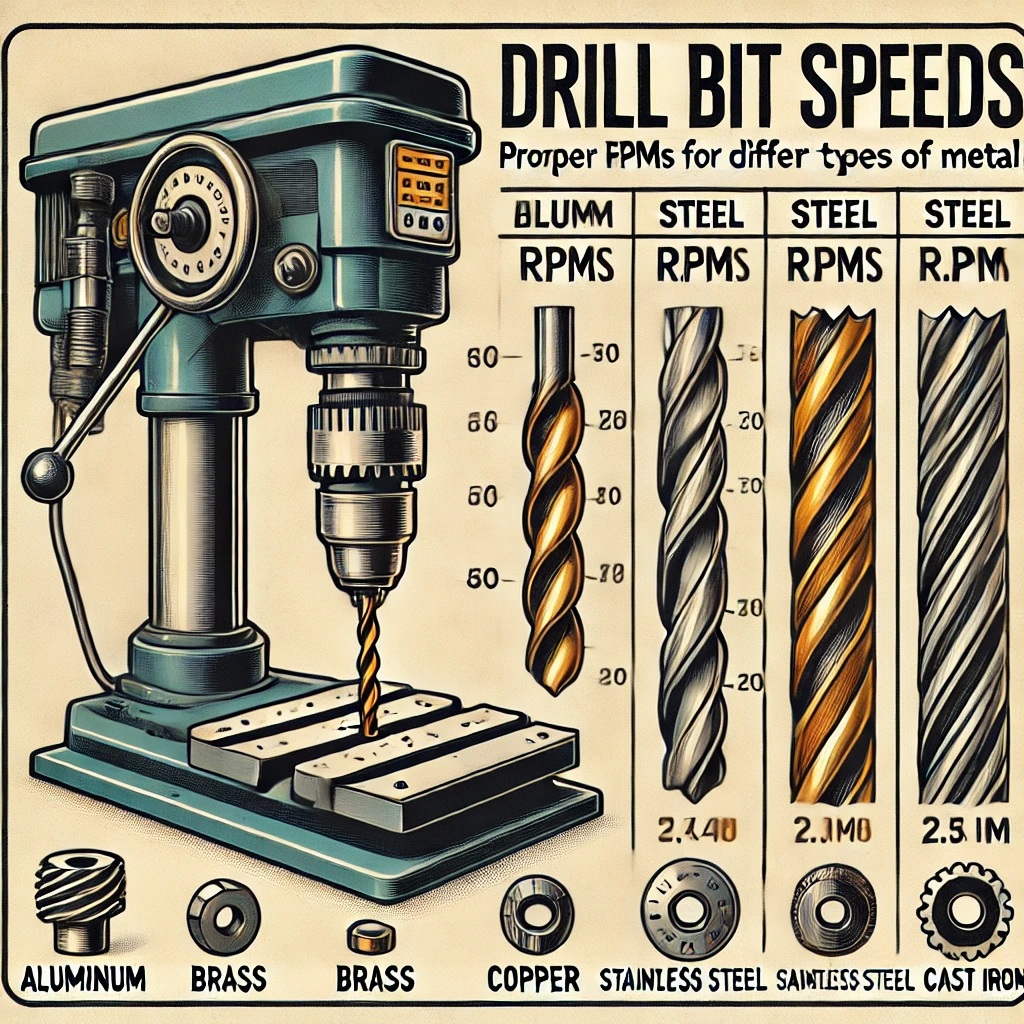
When drilling metal, choosing the correct drill bit speed is crucial for achieving clean cuts, preventing overheating, and extending the life of your drill bit. Drill speed is measured in Revolutions Per Minute (RPM) and varies depending on the type of metal, drill bit material, and hole size.
General Speed Guidelines
- Harder metals (e.g., stainless steel, cast iron, titanium) → Slower speeds are required to reduce heat buildup and avoid bit dulling.
- Softer metals (e.g., aluminum, brass, copper) → Faster speeds can be used, but excessive heat must still be avoided.
Recommended RPMs for Common Metals
| Material | High-Speed Steel (HSS) Drill Bits | Cobalt Drill Bits | Carbide Drill Bits |
|---|---|---|---|
| Aluminum | 2,400 – 3,000 RPM | 2,000 – 2,800 RPM | 1,800 – 2,500 RPM |
| Brass | 2,000 – 2,500 RPM | 1,800 – 2,200 RPM | 1,500 – 2,000 RPM |
| Copper | 2,000 – 2,500 RPM | 1,800 – 2,200 RPM | 1,500 – 2,000 RPM |
| Steel (Mild) | 700 – 1,000 RPM | 600 – 900 RPM | 500 – 800 RPM |
| Stainless Steel | 200 – 500 RPM | 150 – 400 RPM | 100 – 300 RPM |
| Cast Iron | 300 – 800 RPM | 250 – 700 RPM | 200 – 600 RPM |
Drilling Tips for Metal
- Use Lubrication – Applying a cutting fluid reduces friction, cools the bit, and prevents metal shavings from clogging.
- Apply Steady Pressure – Too much force can cause overheating or breakage; let the drill bit do the work.
- Start with a Pilot Hole – For larger holes, drilling a small pilot hole first improves accuracy and efficiency.
- Avoid Overheating – If you see smoke or discoloration, slow down or allow the bit to cool.
By following these guidelines, you’ll achieve precise, clean holes while extending the life of your drill bits.
Categories: Tile



 Drill Easy